
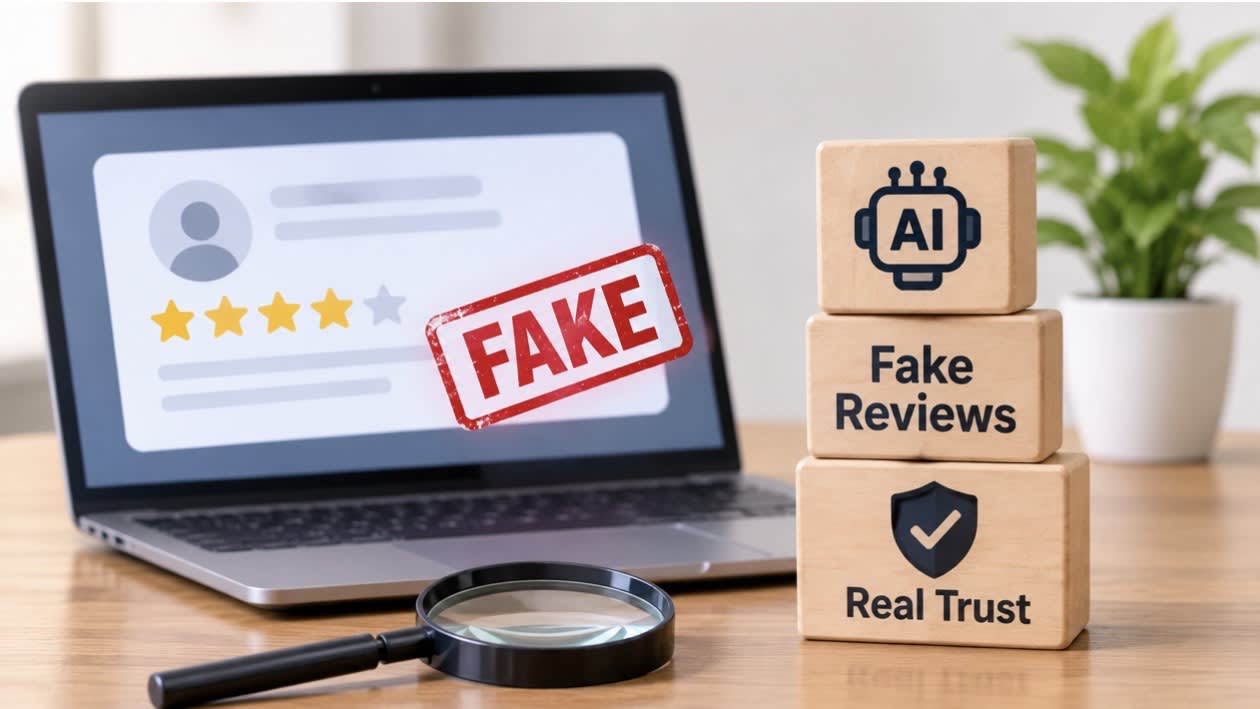
AI tools can now generate realistic-looking reviews in seconds, making it harder for customers to distinguish genuine experiences from misleading feedback.
How Is AI Used to Create Fake Reviews?
AI can generate fake reviews by creating different writing styles, customer experiences, product feedback, and ratings. Some businesses or individuals may misuse these tools to publish misleading positive reviews or damage competitors with negative ones.
Unlike older fake reviews, AI-generated content can sound natural and convincing, making detection more challenging.
Why Are AI-Generated Fake Reviews a Problem?
Fake reviews can influence buying decisions and damage trust between customers and businesses.
Some common risks include:
Misleading customers with false product experiences.
Making unreliable businesses appear trustworthy.
Damaging competitors through fake negative feedback.
Manipulating online ratings and business reputations.
Making genuine customer feedback harder to identify.
How to Identify Potentially Fake AI Reviews
Although no single sign proves that a review is fake, some warning signs deserve attention:
Generic language: Reviews use overly positive or vague descriptions without real details.
Repeated phrases: Multiple reviews contain similar wording or sentence structures.
Unusual review patterns: A business suddenly receives many reviews within a short period.
Unverified experiences: Reviews lack specific details about the product or service.
Suspicious accounts: Reviewer profiles show unusual activity or repeated reviewing patterns.
Remember, AI detection tools are not always accurate. A well-written review is not automatically fake.
How Can Businesses and Review Platforms Prevent Fake Reviews?
Businesses and review platforms can take practical steps to improve review authenticity:
Verify customer purchases where possible.
Monitor unusual review activity.
Report suspicious reviews for investigation.
Use moderation systems and AI-assisted fraud detection.
Encourage customers to share honest experiences.
AI can be part of the solution too. When used responsibly, it can help identify suspicious patterns and support human review moderation.
FAQ
Can AI create fake online reviews?
Yes. AI writing tools can generate realistic-looking positive or negative reviews, sometimes without any genuine customer experience behind them.
How can you tell if a review is AI-generated?
Look for repeated wording, generic descriptions, unusual review patterns, and suspicious account activity. However, these signs alone cannot confirm AI involvement.
AI is changing how online reviews are written, but customer trust still depends on genuine experiences. As fake reviews become more sophisticated, customers and businesses need to pay closer attention to review authenticity.
At Complaint-Review.com, explore company reviews, understand customer experiences, and share your own feedback to help others make informed decisions.