

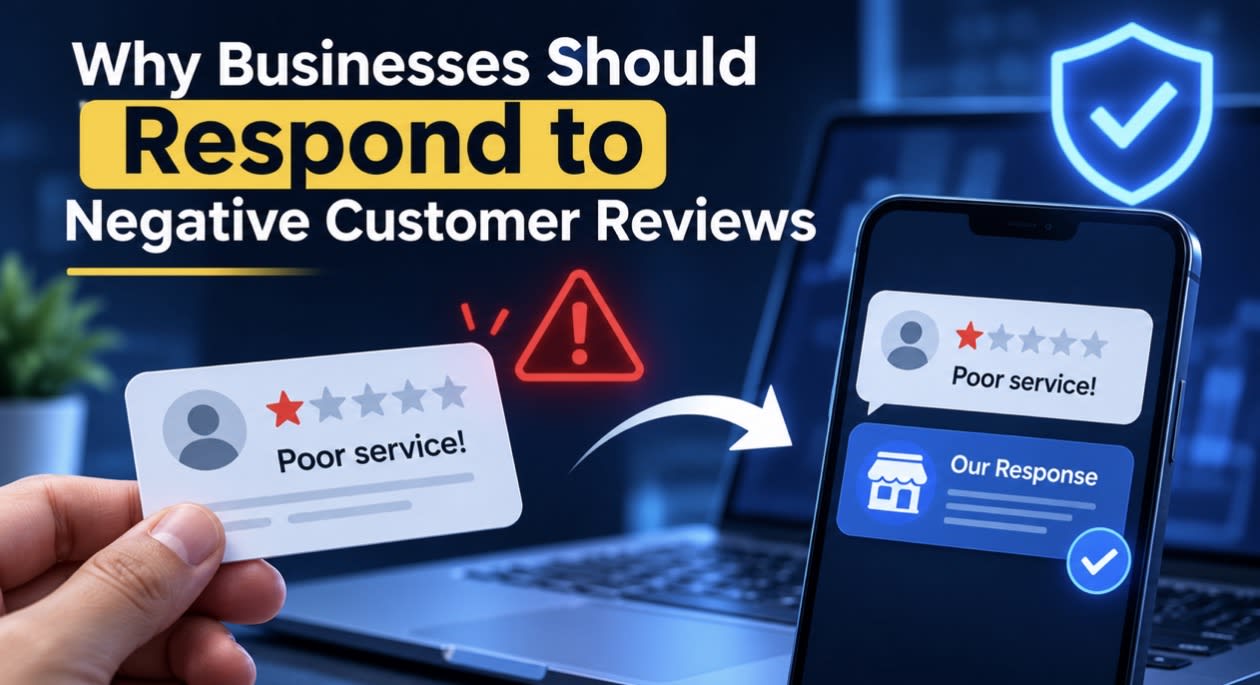
However, receiving a negative review does not always mean a business has lost a customer. How a company responds can make a significant difference. A professional and helpful response shows that the business listens to customer feedback and takes concerns seriously.
Why Should Businesses Respond to Negative Customer Reviews?
Businesses should respond to negative customer reviews because it helps build trust, address customer concerns, protect their online reputation, and demonstrate a commitment to customer service.
A thoughtful response also gives potential customers an opportunity to see how the company handles problems rather than judging it only by the complaint.
1. Builds Customer Trust
Customers want to know that a business cares about their experience. When a company responds to a negative review, it shows that customer feedback is not being ignored.
Even if the original problem cannot be resolved immediately, acknowledging the concern and explaining the next steps can create a more positive impression.
For example, if a customer complains about receiving a damaged product, the company can apologize, request the order details through a private channel, and explain how the issue will be investigated.
2. Helps Businesses Resolve Customer Problems
Negative reviews often highlight problems that businesses may not know about.
Common customer complaints include:
Delayed deliveries
Refunds and payment issues
Poor customer support
Incorrect orders
Defective products
Unexpected charges
Difficult cancellation processes
By responding to these complaints, businesses can identify the issue and work toward a suitable solution.
3. Protects Online Business Reputation
Online reviews can influence how potential customers evaluate a company. A business with negative reviews and no responses may appear less attentive to customer concerns.
Responding professionally does not remove the original review, but it provides additional context and demonstrates accountability.
Businesses should avoid arguing with customers or posting defensive replies. A calm and respectful response is generally more helpful.
4. Shows Potential Customers That Feedback Matters
Not every person reading a negative review has experienced the same problem. Some are simply researching a company before choosing its products or services.
When they see a helpful company response, they can better understand how the business handles complaints.
A professional response can communicate that the company is willing to listen, investigate problems, and improve its customer service.
5. Helps Businesses Identify Repeated Problems
One negative review may describe an individual experience. However, multiple complaints about the same issue could indicate a larger business problem.
For example:
Several customers report delayed refunds.
Multiple buyers complain about damaged packaging.
Customers repeatedly mention unhelpful support.
Different users report unexpected billing charges.
Businesses can review these patterns and make improvements to their products, policies, or customer service processes.
How Should a Business Respond to a Negative Customer Review?
A business should respond quickly, professionally, and respectfully. The response should acknowledge the customer's concern and explain what steps can be taken to investigate or resolve the problem.
Here are five practical steps:
1. Acknowledge the complaint: Show that the business has read and understood the customer's concern.
2. Apologize when appropriate: Offer a genuine apology for the customer's negative experience.
3. Avoid arguments: Do not blame, insult, or challenge the customer publicly.
4. Offer a practical solution: Explain how the business intends to investigate or address the issue.
5. Protect customer privacy: Never request sensitive personal or payment information in a public review response. Use an appropriate private support channel.
Example of a Professional Response to a Negative Review
Customer Review:
"I ordered a product, but it arrived damaged. I contacted customer support several times and still haven't received a proper solution."
Business Response:
"We're sorry to hear about your experience and apologize for the inconvenience. We understand how disappointing it can be to receive a damaged product. Our team would like to investigate this issue and help you find a suitable solution. Please contact our customer support team through our official support channel with your order details."
This response acknowledges the problem, avoids arguments, and offers a clear next step without exposing private customer information.
What Should Businesses Avoid When Responding to Negative Reviews?
Businesses should avoid responses that can make customer complaints worse.
Common mistakes include:
Ignoring negative feedback completely.
Copying the same generic response to every complaint.
Blaming customers without investigating the issue.
Making promises that cannot be fulfilled.
Sharing private customer information publicly.
Using aggressive or unprofessional language.
Asking customers to remove honest reviews in exchange for assistance.
A professional response should focus on resolving the concern rather than protecting the company's image at the customer's expense.
Can Responding to Negative Reviews Improve a Business's Online Reputation?
Yes. Responding to negative reviews can help improve a business's online reputation by showing that it takes customer feedback seriously and is willing to address problems.
However, responding alone does not guarantee better ratings, improved search rankings, or customer retention. Businesses also need to resolve genuine issues and improve the customer experience.
Consistent, honest communication can help potential customers make more informed decisions.
FAQs
Why is it important for businesses to respond to negative reviews?
Responding to negative reviews helps businesses acknowledge customer concerns, provide solutions, build trust, and demonstrate accountability.
Can negative reviews damage a company's reputation?
Yes. Repeated unresolved complaints can affect customer confidence and influence purchasing decisions. However, professional responses and genuine improvements can help address these concerns.
Should businesses delete negative customer reviews?
Businesses should not attempt to remove honest criticism simply because it is negative. Reviews that violate a platform's policies can be reported through the platform's official reporting process.
Do negative reviews affect customer buying decisions?
Yes. Potential customers may use negative reviews to identify possible problems with a company's products, services, pricing, or customer support before making a purchase.
Negative customer reviews are an opportunity for businesses to understand customer concerns and improve their services. Ignoring complaints can leave customers feeling unheard, while professional responses demonstrate accountability and a willingness to resolve problems.
Customers should also have access to genuine reviews and transparent company responses before making purchasing decisions.
At Complaint Review, consumers can explore company reviews, share their experiences, and raise concerns about products or services. Reading customer feedback can help people make more informed decisions about the businesses they choose.